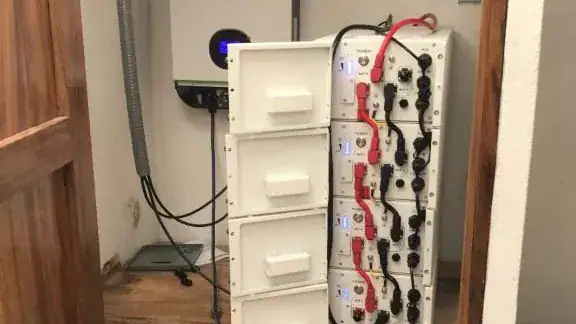
Power: solar panels and a battery bank, one set per bungalow
Lights, the fridge, and charging your phone and laptop. It is sized for comfortable use rather than unlimited use — this is a bungalow on a solar array, not a hotel on the grid.
There is no generator, which means there is no generator noise. Several days of cloud in the rainy season can draw the batteries down, so bring a headlamp each; there are candles too.
- Runs the fridge, the lights and your devices
- No generator, and no generator noise
- Nothing that makes heat — no hairdryer, no electric kettle, no plug-in fan
- A USB rechargeable fan is fine
Water: mountain spring, gravity-fed
It arrives by gravity from a spring above the property. No pumps, no chemicals, no tank to run dry. It runs cold and it runs continuously.
Hot water comes from a solar heater or an in-line gas heater depending on which bungalow you take. Every bungalow also has an outdoor shower, for rinsing the sand off before you go inside.
The tap water is tested clean. Every bungalow also has a five-gallon jug of filtered drinking water on a dispenser if you would rather not drink from the tap — one is included, and each additional jug is 200 pesos.
Gas: propane tanks
The stove, and in most bungalows the hot water, run on propane. Tanks are changed by the staff, so you will probably never think about it. If one runs out while you are here, someone is on the property from 9am to 5pm, Monday to Saturday.
Waste: everything leaves by boat
There is no collection truck, because there is no road. Trash and recycling go out by boat.
Vegetable scraps go over the rail to the land crabs, which is less a policy than a spectator sport. Meat scraps and bones are different — those go into the ocean, so they do not draw animals up to the bungalows. Septic systems are simple here, so paper goes in the bin beside the toilet, never flushed.
Connected, or not — you choose the bungalow
Four of the six have satellite Wi-Fi: Casa Sonido Del Mar, Casa Palmas, Casa Zadro and Casa Sara. Guests describe it as fast and dependable, and people have worked from it.
Casa Huesos and Casa Cactus have none at all, deliberately, and the people who book those two generally book them for that reason. Cell signal is a separate thing: it comes and goes, in some spots, and you should never count on it.